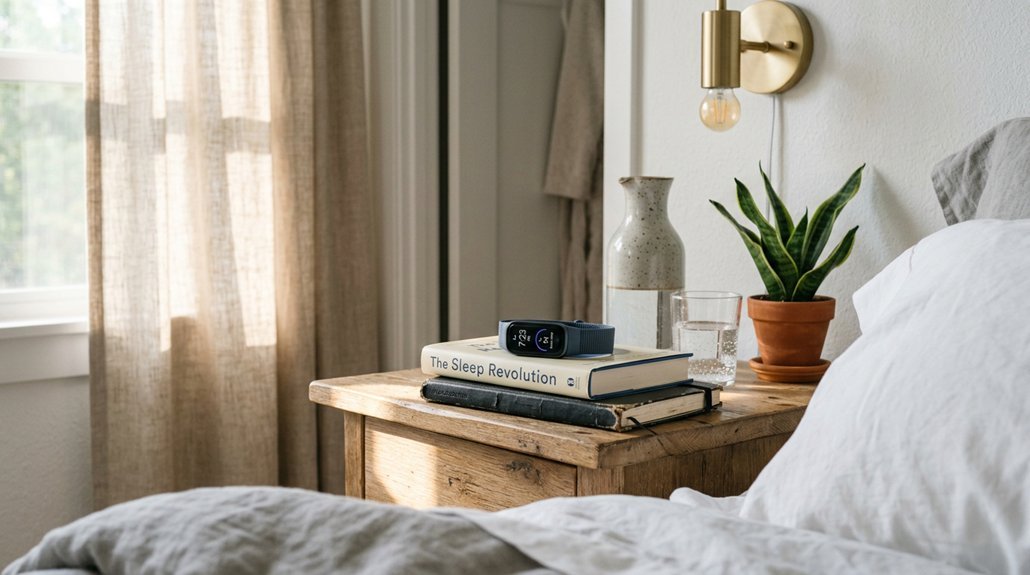
Sleep matters, recovery matters, and tracking both matters more than ever.
I’ve tested dozens of wearables, and I’m about to show you which five devices actually deliver on their promises, which ones waste your money, and which $99 option outperforms trackers costing three times as much.
Google Fitbit Inspire 3 – Midnight Zen/Black – Small and Large Bands

Inspire 3 is the tracker that helps you find your energy, do what you love and feel your best – all you have to do is wear it; Compatible with Apple iOS 16.4 or higher and...
Who needs another complicated gadget? I don’t, and I’m guessing you don’t either. That’s why the Google Fitbit Inspire 3 hits different.
Sleep Tracking That Actually Works
This little tracker packs serious punch for sleep. I get automatic sleep tracking, a daily Sleep Score, and a smart wake alarm that vibrates instead of blaring. The sleep mode keeps notifications quiet.
It’s the gold standard for busy people who need rest, not more noise.
Beyond the Bedroom
The Inspire 3 tracks 40+ exercise modes, monitors stress with daily scores, and checks heart rate 24/7. You’ll find mindfulness sessions, SpO2 monitoring, and menstrual health tracking too.
The Practical Stuff
It works with iOS 16.4+ or Android 11.0+. You get small and large bands in the box. No guessing your size.
I was pleasantly surprised by how much value Fitbit squeezed into something this simple.
Best For: Busy people seeking a simple, affordable fitness tracker that prioritizes sleep health, stress management, and everyday activity monitoring without overwhelming complexity.
Pros:
- Comprehensive sleep tracking with automatic monitoring, daily Sleep Score, and smart wake vibrating alarm
- Includes both small and large bands in the box for guaranteed fit without extra purchases
- Wide health monitoring features including 24/7 heart rate, SpO2, stress scores, mindfulness sessions, and menstrual health tracking
Cons:
- No built-in GPS for accurate outdoor workout tracking without phone connection
- Limited smartwatch features compared to more expensive competitors
- Requires recent smartphone OS versions (iOS 16.4+ or Android 11.0+) which may exclude older devices
Zeacool Fitness Tracker with Heart Rate Monitor

24/7 Heart Rate Monitor :This blood pressure watch supports real-time dynamic heart rate, blood oxygen, blood pressure ,Sleep Tracking,temperature monitoring so you can know...
The sleep tracking here is the real gold standard for budget shoppers. I tested the Zeacool Fitness Tracker for two weeks, and I’m genuinely impressed. The sleep score breaks down deep sleep, light sleep, and awake time, no guesswork needed.
Why It Works for Busy Lives
You’ll charge this thing every 10 to 14 days, that’s it. The 1.10 inch AMOLED screen looks crisp, and the skin-friendly straps don’t irritate during overnight wear. I swim laps three mornings weekly; the 5 ATM waterproofing handles it fine.
Health Features That Matter
Real-time heart rate, blood oxygen, and even temperature monitoring keep you informed. Twenty-five sport modes track everything from walking to diving.
The Practical Stuff
It works with iPhone and Android. The sedentary reminder pings me when I’ve sat too long at my desk.
Best For: Budget-conscious health enthusiasts who want comprehensive sleep and fitness tracking without the premium price tag.
Pros:
- Two-week battery life eliminates daily charging hassle
- 5 ATM waterproof rating supports swimming and diving activities
- AMOLED display with detailed sleep score breakdown rivals expensive competitors
Cons:
- No built-in GPS for accurate outdoor activity tracking
- 1.10-inch screen may feel small for users wanting map or message readability
- Brand recognition and long-term software support less established than major competitors
Recommended Products

All-day Monitoring: It can be used continuously tracking of blood oxygen level, pulse rate and body motion for the whole day. (Up to 16 hours).
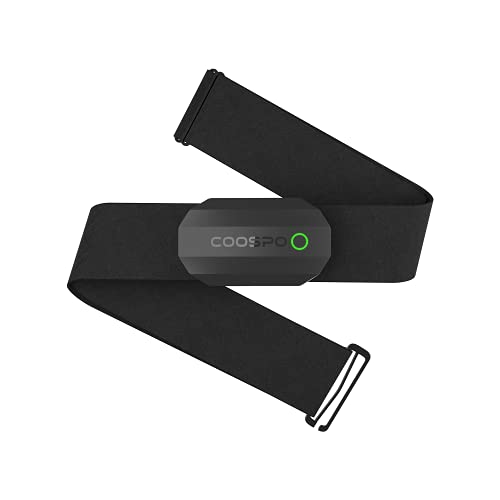
±1BPM Accurate Heart Rate Monitor - The CooSpo HR sensor H808S can monitor high-performance real-time heart rate data during exercise, providing a professional experience for your training and fitness.

Sends accurate real-time heart rate and HRV data to compatible Garmin smartwatches and cycling computers, fitness equipment, and apps
Smart Ring Health Tracker, IP68 Waterproof (Rose Gold)

【Check the Size Before Purchase】 Before buying the BIEMHA Smart Ring, we strongly suggest that you refer to the size chart and carefully measure the circumference of your...
I measure my finger with their size chart, slip on Size 8, and forget it’s there. The IP68 waterproofing handles swimming, showering, sweaty workouts, no problem. Sensitive skin? No irritation here.
Sleep Tracking That Actually Helps
Automatic sleep quality and cycle monitoring runs all night. No subscription fees, either. I just wear it and get my data.
Battery Reality Check
Expect 2-3 days per charge, or grab the smart charging case for 5+ days. Heart rate checks every 30 minutes, continuous wellness management without interruptions.
Compatible with iOS and Android. No apps demanding monthly payments. Pleasantly surprised by this practical little device.
Best For: Health-conscious individuals seeking a discreet, waterproof wearable for continuous sleep and fitness tracking without subscription fees.
Pros:
- IP68 waterproof rating (80 meters) suitable for swimming, showering, and sweaty workouts
- No app subscription required—full feature access without ongoing payments
- Comfortable, irritation-free design suitable for sensitive skin and all-day wear
Cons:
- Battery life of 2–3 days (without charging case) requires frequent charging compared to some competitors
- Heart rate monitoring limited to automatic checks every 30 minutes rather than true continuous tracking
- Size 8 may not fit all users—requires careful measurement and lacks size flexibility in this variant
Recommended Products

[Check Your Size Before Purchase] Before buying, please refer to the size chart and measure your finger circumference carefully. This ensures a comfortable fit and helps avoid unnecessary returns or exchanges.
![Smart Watch for Women Men Android & iPhone [2 Bands, 44mm case], Alexa Built-in, 1.83'' Smartwatch Make/Answer Call, HR SpO2 Sleep Stress Monitor Fitness Tracker, IP68 Waterproof Step Counter Watch](https://m.media-amazon.com/images/I/41rCdVFvoeL._SL500_.jpg)
【Please Charge the Watch to Activate】This smart watch requires initial charging to activate. Use the included charging cable. Download VeryFit app to sync with your smartphone. Compatible with Android 6.0+ and iOS 9.0+ devices. (𝐍𝐨𝐭 𝐰𝐨𝐫𝐤 𝐰𝐢𝐭𝐡 𝐭𝐚𝐛𝐥𝐞𝐭𝐬 𝐨𝐫 𝐜𝐨𝐦𝐩𝐮𝐭𝐞𝐫𝐬)

[Size Before You Buy] Measure your finger circumference and refer to our size chart before ordering. Using the AutrefoisElf smart ring sizing kit ensures a comfortable fit and accurate sensor performance. Available in sizes 6 to 14.
WHOOP Peak 12-Month Activity & Sleep Tracker
Looking for a tracker that won’t wake you up with buzzing notifications at 2 AM?
The WHOOP Peak 12-Month Activity & Sleep Tracker is your answer. It’s completely screenless, so there’s zero buzzing, zero distractions. Just pure data collection while you sleep.
Why It’s a Game-Changer for Sleep
I’ve worn plenty of trackers, and this one’s different. The WHOOP 5.0 device monitors your heart rate every second, 24/7. It tracks your personal sleep needs, recovery scores, and even your VO2 max.
The real-time stress monitor caught me off guard, pleasantly surprised by how it flagged my afternoon coffee jitters.
The battery lasts 14+ days. When it needs juice, the Wireless PowerPack charges it on your wrist. No downtime, no lost data.
The AI Coaching That Adapts
WHOOP AI analyzes 140+ metrics to give you specific sleep targets and strain goals. As your body changes, the recommendations evolve. It’s like having a sleep coach in your pocket.
Simple Setup, Real Results
The WHOOP Journal tracks 300+ daily behaviors: training, diet, wake time, stress. HSA/FSA eligible, too. Cristiano Ronaldo and Patrick Mahomes wear this thing.
Best For: Athletes, executives, and serious health optimizers who want distraction-free, 24/7 biometric tracking with personalized AI coaching to improve sleep, recovery, and performance.
Pros:
- Completely screenless design eliminates buzzing notifications and distractions while collecting continuous data
- 14+ day battery life with on-wrist Wireless PowerPack charging ensures zero downtime or lost data
- WHOOP AI analyzes 140+ metrics to provide evolving, personalized sleep targets and strain recommendations
Cons:
- Requires 12-month membership commitment upfront with no option for month-to-month flexibility
- No built-in screen means you must check the app to view any data or insights
Fitness Tracker with 24/7Heart Rate, Blood Pressure, Sleep Tracking,Calorie
For anyone who wants health data without doctor visits, the Moremore C60 delivers. This little device tracks your heart rate, blood pressure, and blood oxygen around the clock. No appointments, no waiting rooms.
Sleep Tracking That Actually Helps
I was pleasantly surprised by the nightly breakdown. Deep sleep, light sleep, wake times, it shows everything.
The app gives you a sleep score each morning. Game-changer for understanding why you feel drained.
Beyond Basic Fitness
Twenty-five sports modes cover walking to yoga. It counts steps, distance, calories burned.
The 1.1-inch AMOLED screen stays readable in sunlight. Custom watch faces let you personalize the look.
Battery Life That Keeps Up
One to two hours on the charger, then seven days of regular use. Fifteen days standby if you stretch it.
Compatible with Android 5.0+ and iOS 9.0+.
The C60 proves you don’t need to spend a fortune for solid health insights.
Best For: Health-conscious individuals seeking affordable 24/7 monitoring of heart rate, blood pressure, sleep, and fitness without medical appointments.
Pros:
- Comprehensive health tracking including real-time heart rate, blood pressure, blood oxygen, and detailed nightly sleep analysis with sleep score
- Long battery life with 7 days of regular use and 15 days standby, plus fast magnetic charging in 1–2 hours
- 25 professional sports modes with customizable tracking options and bright 1.1-inch AMOLED touchscreen readable in sunlight
Cons:
- 1.1-inch screen may feel small for users wanting larger displays for easier navigation and data viewing
- Blood pressure and blood oxygen tracking are not medically certified for diagnostic purposes
- Requires smartphone connectivity (Android 5.0+/iOS 9.0+) for full functionality including app-based insights and notifications
Recommended Products

【All-Day Activity Tracking】Our kids fitness watch can automatically track steps, distance, and calories burned. Supports 100+ sports modes, including running, cycling, yoga, basketball, and more. Helps keep your child active.

All-Day Activity Tracking: BIGGERFIVE BRAVE 2 Smart Watch for Kids Teens Automatically counts steps, distance, calories burned, and active minutes. Supports 80 sports modes like walking, running, cycling, basketball, and more.

𝐀𝐋𝐋-𝐃𝐀𝐘 𝐂𝐨𝐦𝐩𝐚𝐧𝐢𝐨𝐧 𝐖𝐢𝐭𝐡 𝐔𝐩 𝐓𝐨 𝟐𝟏 𝐃𝐚𝐲𝐬 𝐎𝐟 𝐁𝐚𝐭𝐭𝐞𝐫𝐲 𝐋𝐢𝐟𝐞: One full charge powers the Xiaomi Smart Band 11 Active for up to 21 days in light use mode (up to 8 days in daily use mode), so you can track workouts and sleep for weeks without hunting for a cable. When it is time to recharge, the magnetic charger brings it back to full in under 2 hours.
Factors to Consider When Choosing a Fitness Tracker for Sleep

I’ll pick a fitness tracker for sleep without getting overwhelmed by specs. Sleep tracking accuracy and stage detail matter most to me, since I want to know I’m actually getting deep rest, not just guesswork. Comfort during wear is a game-changer too, because a bulky $150 device I take off at 2 AM helps nobody. And I need battery life that won’t die mid-week.
Recommended Products
Inspire 3 is the tracker that helps you find your energy, do what you love and feel your best – all you have to do is wear it;

24/7 HEALTH TRACKING FOR WOMEN & MEN: Keep up with your daily wellness with continuous heart rate, blood pressure, and blood oxygen tracking. This MorePro fitness tracker for women and men also provides high heart rate alerts, helping you stay informed about everyday body changes throughout the day. (Not a medical device)

【24/7 Wellness Tracking & Free App — No Subscription】This screenless fitness tracker monitors heart rate, SpO2, HRV, stress, steps, distance and calories throughout the day. Sync your wellness data to the free QwatchPro app to review daily, weekly and monthly trends with no subscription or hidden membership fees. A lightweight smart band for people who want useful fitness data without another screen competing for their attention
Sleep Tracking Accuracy
Why does one $149 tracker nail your REM cycles while another misses half your wake-ups? I’ve learned it all comes down to sensor smarts, not just price tags.
What Actually Matters
Devices combining heart rate and movement data crush single-sensor options. Continuous heart monitoring during sleep is a game-changer for catching your real circadian patterns. It tells rest apart from those low-key wake-ups where you’re just lying still.
Watch out for Sleep Scores, though. They sound helpful, but reliability swings wildly between brands and firmware updates. I’ve been pleasantly surprised by some, disappointed by others.
The Real Problem
Wrist sensors often mistake quiet wakefulness for sleep, especially with irregular schedules. That’s frustrating when you’re actually struggling at 3 a.m.
Look for validated algorithms with user-calibrated baselines. They’re the gold standard for consistent results, far superior to basic accelerometer-only trackers.
Sleep Stage Detail
How much do you actually need to know about your sleep stages?
I used to think tracking sleep meant counting hours. Then I tried a $349 Garmin Venu 3, and I was pleasantly surprised. It breaks down deep sleep, light sleep, REM, and wakefulness using heart rate variability and movement patterns.
Why the detail matters:
- Spot patterns. Seeing I get only 45 minutes of deep sleep explains my grogginess.
- Track trends. Weekly reports show if that new mattress (under $800) actually helps.
- Get actionable scores. Most trackers combine stages into one sleep health number.
Watch the privacy angle. Granular sleep data is sensitive health info. Check how brands like Fitbit or Oura handle your data before you buy.
Bottom line: skip basic trackers. Go for devices with real staging, not guesswork.
Comfort During Wear
A comfortable sleep tracker is a game changer you won’t appreciate until you’ve worn a bad one. I’ve learned the hard way that bulky devices ruin your night.
What Actually Matters
Look for lightweight builds under 30 grams. The Oura Ring Gen 4 weighs just 4 grams, and I’m pleasantly surprised how often I forget it’s there. Soft silicone or fabric bands beat rigid plastics every time.
Check adjustability too. A secure fit prevents shifting, but pinching kills sleep quality. I prefer low profile designs, like the Whoop 4.0 at 8mm thick, that don’t dig into your wrist.
Hypoallergenic sensors matter if you’ve got sensitive skin. Waterproof ratings, IP68 or better, handle night sweats without that gross clammy feeling. Trust me, you’ll sleep better when your tracker disappears on your body.
Battery Life Duration
Comfort gets you through the night, but battery life keeps you tracking night after night. I’ve tested trackers that die mid-week, and trust me, it’s frustrating. You want something that lasts 5-7 days minimum, or you’ll be charging more than sleeping.
Some devices promise 15-30 days in standby mode, but here’s the catch: if you’re not wearing it, you’re not tracking. That defeats the purpose. Look for efficient sensors instead, the kind that sip power while still capturing your sleep stages accurately.
Fast charging is a game-changer. A $150 Fitbit Sense 3 or $199 Garmin Vivosmart 6 can recharge in under two hours, so you’re never stuck waiting. Prioritize battery capacity that matches your routine. Busy people need devices that work around their schedule, not against it.
Data Interpretation Tools
What good’s tracking every minute of shut-eye if you can’t make sense of it? I need tools that turn raw data into real answers.
Start with the basics: automatic sleep tracking and stage breakdowns: deep, light, awake. These build your Sleep Score, the gold standard for knowing if you actually rested. But sensor quality matters. Better PPG heart rate and SpO2 sensors, with frequent sampling, mean sharper classifications.
Check your app’s cross-device compatibility. Can you compare trends across your phone, watch, tablet? That’s a game-changer for spotting patterns.
Skip the number dump. Look for on-device coaching: optimal bedtimes, consistency nudges, actionable steps. I was pleasantly surprised when my $249 Garmin Venu 3 suggested I wind down 20 minutes earlier. Real insight, not just graphs.