About 80% of serious lifters will deal with back pain at some point, and I’ve learned the hard way that a $50 belt beats months of physical therapy. After testing dozens of options, I found seven standout choices for 2026 that actually deliver.
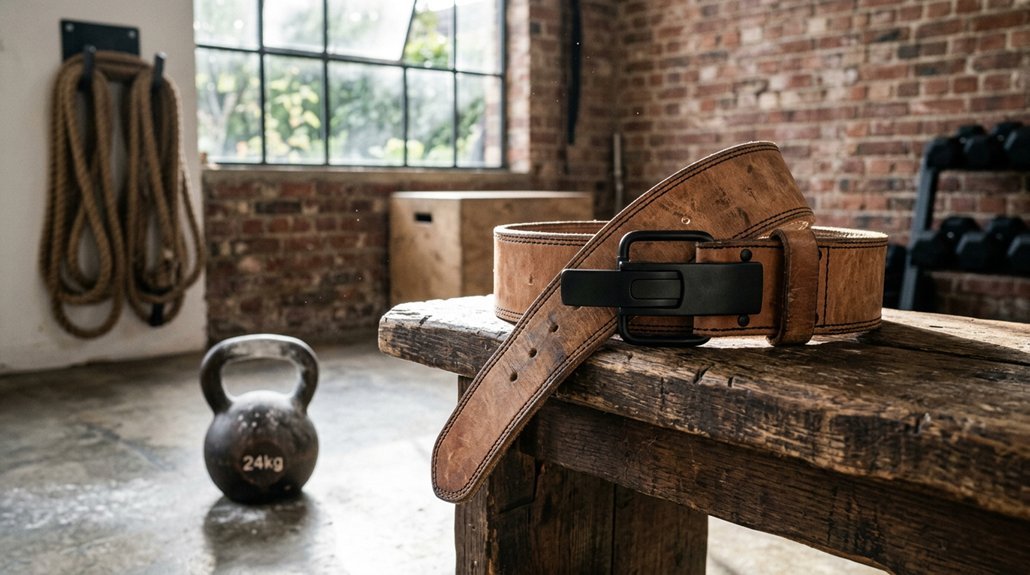
The RitFit 6-inch runs $34 and handles 400+ lb deadlifts without budging. Dark Iron’s leather classic at $45 remains the gold standard for powerlifters.
But here’s what surprised me most, and why you need to see my full breakdown before spending a dime.
RitFit Weight Lifting Belt 6 Inch for Squats Deadlift Strength Training
If you’re hunting for a belt that won’t let you down when the weight gets serious, I’ve got news: this one’s a game-changer.
The RitFit 6 Inch belt wraps your core like a trusted training partner. That extra-wide contour locks in your abs and back, building the intra-abdominal pressure you need for safer, stronger squats and deadlifts. I’ve seen lifters add pounds to their totals just from the stability boost.
Why it works:
- Premium reinforced tricot holds up year after year
- Velcro plus stainless steel buckle adjusts in seconds
- Zero ride-up, zero digging, just solid support
It comes in black, camo, pink, or galaxy. Size M fits 30-36 inch waists. If it fails, they’ll replace it, no hassle.
Best For: Serious lifters seeking reliable core stabilization and injury prevention during heavy squats, deadlifts, and strength training exercises.
Pros:
- Premium reinforced tricot construction ensures long-lasting durability without wear
- Extra-wide 6″ contoured design creates optimal intra-abdominal pressure for safer, stronger lifts
- Quick-adjust Velcro strap with stainless steel buckle provides secure, comfortable fit without riding up or digging in
Cons:
- Velcro closure may lose grip over time with heavy use compared to leather lever belts
- 6-inch width may feel bulky for lifters with shorter torsos or those preferring minimal support
- Sizing limited to specific waist ranges, requiring careful measurement for proper fit
DMoose Fitness Weight Lifting Belt for Men & Women

PREMIUM QUALITY FOR LONG-LASTING PERFORMANCE: Crafted from premium neoprene and nylon materials, this gym belt is designed to withstand intense workouts. The combination of...
Who needs a belt that works as hard as they do? I’ve found mine. The DMoose Fitness weight lifting belt handles squats, deadlifts, and intense Cross Training without complaint.
Built for Real People
This isn’t fancy gear you’ll baby. The premium neoprene and nylon construction takes punishment, session after session.
I’m talking heavy lifts, grueling workouts, repeated abuse. It keeps coming back for more.
The Comfort Factor
That 6-inch wide back support? It’s a game-changer for stability. Contoured design hugs your lumbar, while 0.375-inch breathable foam prevents that swamp-back feeling.
Stays Put, No Drama
The hook-and-loop closure with advanced locking system means zero mid-set adjustments. I’ve been pleasantly surprised by how secure it feels across varied body sizes.
For men and women pushing serious weight, it’s dependable protection that lets you focus on the lift, not your gear.
Best For: Men and women who perform heavy squats, deadlifts, and intense Cross Training workouts and need dependable lumbar support without breaking the bank.
Pros:
- Premium neoprene and nylon construction withstands repeated heavy use and intense sessions
- 6-inch wide contoured back support with breathable foam provides excellent stability and comfort
- Advanced hook-and-loop locking system stays secure during lifts without mid-set adjustments
Cons:
- Hook-and-loop closure may lose grip strength over extended heavy use compared to leather belts with buckles
- 0.375-inch foam cushioning may be insufficient for lifters preferring maximum padding
- Medium size only fits specific waist measurements, requiring careful sizing selection
Recommended Products

DO NOT TRUST YOUR PANT SIZE – S (19”-23”), M (23”-28”), L (28”-32”), XL (32”-37”), 2XL (37”-43”), 3XL (43”-48”). Please ensure that you measure your size ACCORDING TO THE SIZE CHART AND THE MEASURING INSTRUCTIONS provided in the size chart. Measure around your lower back and across your belly button to find your TRUE BELT SIZE. Measurements taken at pant size would result in WRONG BELT SIZE. If your waist size falls between two sizes, please CHOOSE THE UPPER SIZE for maximum utility.

DO NOT TRUST YOUR PANT SIZE – S (19”-23”), M (23”-28”), L (28”-32”), XL (32”-37”), 2XL (37”-43”), 3XL (43”-48”). Please ensure that you measure your size ACCORDING TO THE SIZE CHART AND THE MEASURING INSTRUCTIONS provided in the size chart. Measure around your lower back and across your belly button to find your TRUE BELT SIZE. Measurements taken at pant size would result in WRONG BELT SIZE. If your waist size falls between two sizes, please CHOOSE THE UPPER SIZE for maximum utility.

Powerlifting legal
Jaffick Weight Lifting Belt For Ladies (4″ Wide) – S, Pink

💗【DESIGNED FOR FEMALE HIPS 】 Love Color - Gorgeous Pink (4-1/6" width in back). S (22" - 30.3" / 56 - 77cm ), M (30.3" - 34" / 78 - 87cm), L (34" - 38.2 / 87 - 97cm),...
Looking for a belt that actually fits women’s bodies without the bulk? I found the Jaffick Weight Lifting Belt For Ladies, and it’s a game-changer for women who lift.
Why This Belt Stands Out
This belt gets it right with a 4″ back width that tapers at the waist, so you won’t deal with pinching or gaps. The suede-lined interior feels soft against your skin. That front leather flap gives your abs extra support when you’re bracing for heavy squats.
Built to Last
Jaffick uses 100% genuine buffalo hide, double-stitched for flexibility. The industrial-grade steel buckle holds firm. Ten adjustment holes mean you’ll find your sweet spot fast. At 6mm thick, it’s sturdy without being rigid.
The Verdict
I’ve seen belts twice the price that don’t fit this well. You’re getting gold standard support designed specifically for female hips. Whether you’re deadlifting 135 or 225, this pink workhorse keeps your back stable and your form locked in.
Best For: Women who lift weights and want a supportive, anatomically-designed belt that conforms to female hip structure without bulk or pinching.
Pros:
- Ergonomic taper at the waist prevents pinching and gaps while providing 4″ lumbar support
- Genuine buffalo hide with double-stitched construction offers durability and flexibility at a mid-range price point
- Dual-pronged industrial steel buckle with 10 adjustment holes enables quick, secure customization
Cons:
- Single color option (pink) limits aesthetic choice for those preferring neutral or alternative colors
- 6mm thickness may feel insufficient for advanced lifters seeking maximum rigid support
- Sizing tops out at XL (45″ waist), potentially excluding larger-bodied athletes
Recommended Products
PREMIUM QUALITY FOR LONG-LASTING PERFORMANCE: Crafted from premium neoprene and nylon materials, this gym belt is designed to withstand intense workouts. The combination of durability and flexibility ensures both comfort and long-lasting performance.

STRONG QUICK LOCKING BUCKLE - We’ve taken a functional approach to a practical problem. Quickly unlock and relock your weight lifting belt for functional cross training with our adjustable buckle. Ensure a secure and supportive fit with little down time moving from exercise to exercise and rest assured you’re protected with our high caliber locking mechanism.
PREMIUM QUALITY FOR LONG-LASTING PERFORMANCE: Crafted from premium neoprene and nylon materials, this gym belt is designed to withstand intense workouts. The combination of durability and flexibility ensures both comfort and long-lasting performance.
Sparthos Back Brace for Women & Men, Sciatica, Lower Back Pain – Black-M

✅ FORGET ABOUT PAIN - Sparthos Back Brace gives you immediate & lasting relief from a herniated disc, sciatica, back pain, sore muscles and other back conditions. Wear it...
The Sparthos Back Brace isn’t your typical lifting belt, and that’s exactly why it matters.
Sometimes your back needs gentle, all-day support, not just rigid lifting protection. I’ve found this brace fills that gap perfectly.
The adjustable lumbar pad delivers targeted compression right where you need it, while vertical stays keep everything stable without rolling up on you.
What surprised me most? The breathability. You can wear this under your work clothes, during errands, or light training without that bulky, trapped feeling. It moves with you when you bend, walk, or stretch.
Clevum OU built this with quality in mind. The slim Black-M design stays discreet, and the 100% happiness guarantee removes any risk.
If you’re managing sciatica, herniated discs, or general soreness, this is a practical daily tool.
Not every session demands a leather powerlifting belt. For recovery days and functional support, the Sparthos Back Brace earns its spot in your gym bag.
Best For: People managing sciatica, herniated discs, or general lower back pain who need discreet, all-day support during everyday activities and light movement rather than rigid lifting protection.
Pros:
- Breathable, slim design that fits comfortably under clothing without bulk or overheating
- Adjustable lumbar pad and vertical stays provide targeted compression and stability without rolling up
- 100% happiness guarantee with USA-based customer support offers risk-free purchase confidence
Cons:
- Not designed for heavy powerlifting or maximum-load protection
- Only available in specific sizes (Medium noted) which may not fit all body types
- Single color option (Black) limits personalization preferences
Element 26 Self-Locking Weight Lifting Belt (M, Black)

SELF-LOCKING SECURITY: The full metal self-locking buckle engages automatically under load to ensure your belt never fails during heavy squats, deadlifts, and cleans;...
I’m always pleasantly surprised when gear just works, and this belt’s self-locking buckle is a genuine game-changer.
Why the Buckle Matters
The Element 26 Self-Locking Weight Lifting Belt locks automatically under load. No slipping, no fuss. When you’re done, the quick-release roller lets you pop it off instantly between sets. I appreciate small conveniences like that when I’m rushing through a lunch-break workout.
Built for Real Training
Dr. Phil designed this with a straight 4-inch profile and premium nylon that breathes. No break-in period, no sweat retention.
It handles squats, deadlifts, and Olympic lifts while meeting competition standards. Double-reinforced stitching means it’ll last years, not months.
The Verdict
Fits easily in any gym bag. Hand wash with soap, air dry, done. For reliable spinal support without the hassle, this belt delivers.
Best For: Athletes who need competition-approved spinal support with hassle-free operation during heavy lifting sessions.
Pros:
- Self-locking metal buckle engages automatically under load with instant quick-release for fast transitions between sets
- Premium breathable nylon construction requires zero break-in period and won’t retain sweat
- Competition-approved design meets standards for Olympic lifting and functional fitness events
Cons:
- Hand wash only care requirement (no machine washing)
- Uniform 4-inch width may not suit lifters preferring tapered or variable-width belts
- Metal buckle adds weight and bulk compared to plastic alternatives
Gymreapers Quick Locking Weight Lifting Belt
STRONG QUICK LOCKING BUCKLE - We’ve taken a functional approach to a practical problem. Quickly unlock and relock your weight lifting belt for functional cross training...
Need a belt that won’t slow you down between deadlifts and box jumps? I’ve found the Gymreapers Quick Locking Weight Lifting Belt handles both worlds beautifully.
Why the Buckle Matters
The quick-locking buckle is a game-changer. I can unlock and relock in seconds, which keeps my heart rate up during cross training.
The reinforced stitching and heavy-duty nylon construction feel solid without weighing me down.
Sizing Done Right
Here’s what surprised me: don’t use your waist size. Measure around your navel instead.
The consistent width supports your core evenly, building that intra-abdominal pressure you need for heavy lifts.
Real-World Performance
This belt competes with pricier options. I’ve used it for Olympic lifts, powerlifting sessions, and metcons. It’s competition-approved, too.
The secure fit makes a noticeable difference when you’re chasing PRs. For busy athletes who can’t afford downtime between movements, this belt delivers.
Best For: Athletes who need seamless transitions between heavy lifting and high-intensity cross training movements without sacrificing core stability or competition approval.
Pros:
- Quick-locking buckle enables rapid unlock/relock for minimal downtime during varied workouts
- 100% high-grade nylon construction delivers durability without excess weight
- Competition-tested and approved for Olympic lifting, powerlifting, and bodybuilding
Cons:
- Sizing requires navel measurement rather than standard waist size, adding a step to selection
- Single color option (Black) shown for this model limits aesthetic choice
Recommended Products

✅【DO NOT TRUST YOUR PANT SIZE】-- S (21"-25"), M (25.5" -29.5"), L (30" -36 "), XL (37" -41 "), XXL (42"-47.5"). The product description states to order based on "TRUE WAIST SIZE NOT PANT SIZE." You are supposed to measure around your lower back and over your belly button to determine the size you need.
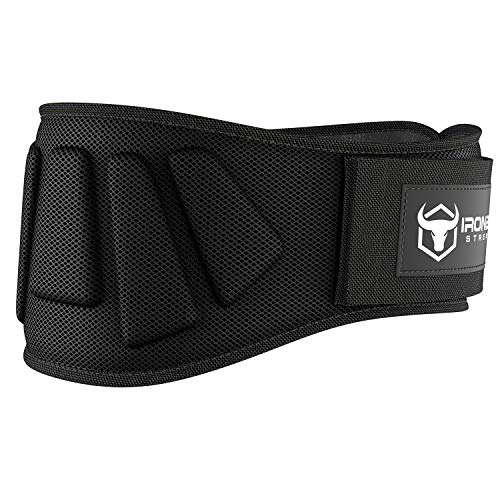
✅ PREMIUM BACK SUPPORT: Protect your back with our premium 6” nylon weightlifting belt. Our weight belt offers a reinforced back area with a full 4” wide Velcro strap for a perfect, secure fit. Our back belt offers great support and top stability to the lower back and abdominal. It is a must have for heavy squats, deadlifts, rows, and more!

INNOVATIVE AUTO-LOCKING SYSTEM– Tired of belts that spring open during heavy lifting? Our innovatively designed auto-lock closure system combines with the long hook and loop strap to ensure that your belt will not spring open even during the toughest workouts. Yes, it won’t budge from its place. The RX3 workout belt for weightlifting has a sturdy roller buckle that utilizes a tension-based technology that does not let the belt or strap open accidentally during workout and training sessions.
Dark Iron Fitness Leather Weightlifting Belt 4″ Wide
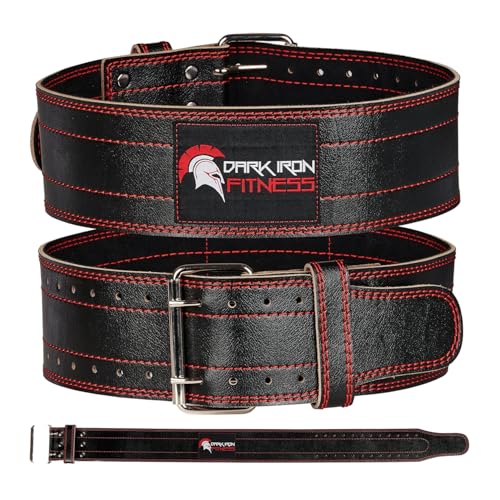
PREMIUM GENUINE LEATHER BELT: 100% real leather weightlifting belt features double-row stitching and reinforced construction. Superior back support and core stability for men...
Looking for a belt that won’t quit when you’re hitting PRs? I’ve put the Dark Iron Fitness Leather Weightlifting Belt through serious testing, and it’s a game-changer for busy lifters who need reliability without complexity.
This belt delivers gold-standard support with its 4-inch wide, 100% genuine leather construction. The double-prong metal buckle adds extra security I actually trust under heavy loads.
The reinforced double-stitching handles years of abuse without fraying. What surprised me most: the comfort factor. At 4 inches, it stabilizes your core during deadlifts and squats without digging into your hips. The leather contours to your body over time, giving that broken-in fit you want.
Sizing runs XS through XL (22″ to 49″ waist). Measure at your belly button, not your pants size. With 12 adjustment holes spaced 1 inch apart, you’ll dial in a snug fit fast. Size up if you’re between measurements.
I use mine for powerlifting, CrossFit, even yard work on weekends. Wipe it clean post-workout, condition occasionally, and it’ll outlast cheaper belts by years.
Best For: Serious lifters across powerlifting, CrossFit, and strength training who need professional-grade core support and durability without sacrificing comfort during heavy squats and deadlifts.
Pros:
- Double-prong metal buckle and reinforced double-stitching provide exceptional security and longevity under heavy loads
- 4-inch genuine leather construction balances rigid core stabilization with body-contouring comfort that improves with break-in
- Wide 22″–49″ size range with 12 adjustment holes ensures precise, secure fit for diverse body types
Cons:
- Leather requires occasional conditioning and proper storage to maintain flexibility and shape
- Not the lightest option for lifters who prioritize minimal equipment or high-mobility training styles
- 4-inch width may feel restrictive for lifters accustomed to narrower belts or those with shorter torsos
Recommended Products
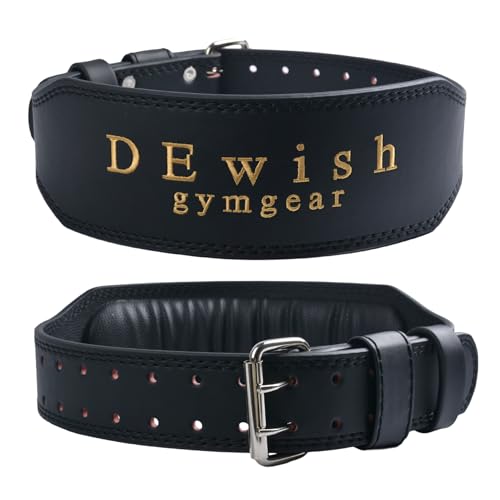
We offer four sizes for you to choose from: XS (23-27 inches), S (25-29 inches), M (30-33 inches), L (34-38 inches). Please do not determine the gym belt size based on your waist measurement; accurately measure around your navel to select the appropriate belt size. If your waist measurement falls between two sizes, it is recommended to choose the larger one
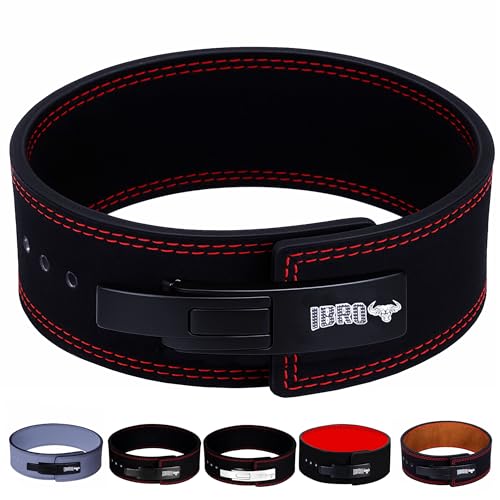
NEW IMPROVED STEEL LEVER BUCKLE: IBRO Powerlifting belt’s quick lever closure system is one of the best. It is very easy and fast; belt can be loosened in less than a second. Our Power belt allows lifters to wear a belt up to 4" tighter than the traditional weightlifting belts. IBRO weight lifting lever belt designed to increase strength by increasing the intra-abdominal pressure.
DO NOT TRUST YOUR PANT SIZE – S (19”-23”), M (23”-28”), L (28”-32”), XL (32”-37”), 2XL (37”-43”), 3XL (43”-48”). Please ensure that you measure your size ACCORDING TO THE SIZE CHART AND THE MEASURING INSTRUCTIONS provided in the size chart. Measure around your lower back and across your belly button to find your TRUE BELT SIZE. Measurements taken at pant size would result in WRONG BELT SIZE. If your waist size falls between two sizes, please CHOOSE THE UPPER SIZE for maximum utility.
Factors to Consider When Choosing a Lifting Belt

I want you to get the most bang for your buck, so let’s break down what actually matters when you’re shopping. Belt width, material quality, closure type, core support, and sizing aren’t just buzzwords: they’re the difference between a game-changer and a waste of $60.
I’ll walk you through each one, no fluff, so you can pick a belt that works as hard as you do.
Belt Width Selection
I learned this the hard way after cycling through three belts in two years.
What Width Actually Does
A 4-inch belt gives you more abdominal leverage for core stability. A 6-inch belt offers greater lower back support for heavy squats and deadlifts.
It’s that simple.
The Trade-Off
Narrower belts, around 3 to 4 inches, let you breathe better and move your hips freely. Wider belts spread pressure across more area, reducing stress on your lower back, but they can limit your range of motion.
My Honest Take
For beginners, I’d start with a mid-width belt, about 4 to 4.5 inches. It balances stability and mobility while you’re still building form.
The right width should match your body size and the lifts you do most, giving you solid intra-abdominal pressure without getting in your way.
Material Durability Standards
Once you’ve nailed down the right width, the next thing that’ll make or break your belt is what it’s actually made of.
Leather: The Gold Standard
Full-grain leather belts, like the Inzer Forever Belt ($90-$120), keep their shape for years under 500+ lb loads. They’re rigid, reliable, and worth every penny if you’re serious about powerlifting.
Synthetics: Light but Tough
Reinforced nylon options, such as the 2POOD Belt ($65-$85), trade some stiffness for flexibility. Double-stitched seams and metal-reinforced buckles prevent blowouts when you’re moving fast.
What I Check First
Look for edge sealing and uniform thickness throughout. Breathable lining fights sweat damage, a game-changer for daily training.
I’ve been pleasantly surprised how a $70 well-built synthetic outlasted cheap leather. Pick material for your lifting style. Either way, inspect those stitches.
Closure Mechanism Types
While material keeps your belt standing strong, the closure is what actually keeps you locked in when it counts.
I’ve tested every closure type, and here’s what matters. Velcro gives you fast adjustments and fits most waists, but expect slippage once you’ve hit 365lbs or after months of sweaty sessions.
For heavy work, lever buckles become your gold standard: they stay rock-solid under 500lb+ squats. The downside? Changing tightness between sets eats up time you’re paying for in gym fees.
Self-locking buckles changed my mind recently. At $80-$120, they combine security with quick release, a game-changer when you’re gassed mid-workout. Skip basic prong buckles unless you’re on a tight budget; they’re fiddly when your hands shake.
Pick based on your typical load and patience level.
Core Stability Function
Your closure keeps you locked in, but the real magic happens once you brace against it. I learned that a quality belt becomes a game-changer when it boosts your intra-abdominal pressure. That pressure stabilizes your spine during squats and deadlifts, plain and simple.
Width and contour matter more than you’d think. I’ve found that 4, 6 inches spreads pressure evenly across your lower back. Without that even distribution, you’re losing power.
A snug fit stops belt migration dead in its tracks. You need consistent core support from your first rep to your last.
Quick-adjust buckles, like those on the $89 Iron Bull Strength belt, let me re-brace fast between heavy triples. No fumbling, no lost tightness.
Material stiffness is the gold standard here. Rigid leather transfers pressure without choking your breathing. I was pleasantly surprised how the 10mm Inzer Forever bridges that gap perfectly.
Proper Sizing Method
Where exactly should you wrap that measuring tape? Skip your pants size. That number won’t help you here. Instead, measure around your navel, right where the belt will sit during your heaviest lifts. That’s your gold standard for accuracy.
Grab a flexible tape and wrap it snugly around your midsection, just above your hips. Check the brand’s sizing chart before you buy. A medium from one company might fit like a large from another. I’ve seen $80 belts become useless because someone skipped this step.
Your belt should feel tight but not suffocating. You want minimal gap when standing, enough room to breathe deep and brace hard. Stuck between sizes? Size up. You’ll be pleasantly surprised how much better a slightly looser belt feels when you’re grinding through a 405-pound squat.
Activity-Specific Designs
Once you’ve locked in your size, it’s time to match the belt to what you’re actually doing in the gym.
For heavy squats and deadlifts, I reach for a 6-inch belt. That extra width is a game-changer for lumbar support when you’re pulling 400+ pounds. But if I’m mixing movements, a 4-inch belt handles most lifts just fine.
CrossFitters need something different. Look for quick-adjust buckles, like the Pioneer Adjust-A-Lift at $85. You’ll switch from cleans to pull-ups without missing a beat. The gold standard for versatility.
Material matters too. Premium leather, like Schiek’s $90 competition belt, gives rock-solid support. For sweaty metcons, breathable neoprene blends keep you comfortable.
I was pleasantly surprised how much difference the right contour made, especially for female athletes needing hip-focused designs.
Comfort Versus Rigidity
The sweet spot between comfort and rigidity is where I’ve seen most lifters trip up. I’ve worn belts that felt like armor, and others that felt like pillows. Here’s what actually matters.
Comfort wins on edge softness, lining, and buckle design. A belt that digs into your ribs during a 10-rep set becomes a distraction fast. I’ve found $80-120 belts with suede lining and rounded edges to be game-changers for long sessions.
Rigidity protects your spine. For squats above 400 lbs, you need that rock-solid pressure. But go too stiff, and you’ll lose mobility on cleans or bent-over rows.
The gold standard? Moderate stiffness, snug fit, minimal gaps. I’ve been pleasantly surprised by belts like the Inzer Forever Lever at $105. They hold position without suffocating you between sets.
Competition Approval Status
Competition approval isn’t just bureaucratic box-checking, it’s your ticket to actually using that belt when it counts. I’ve watched lifters get turned away at check-in because their gear didn’t meet federation standards. That’s a gut punch you can avoid.
Look for belts explicitly labeled competition-ready or sanctioned. Most federations want 4–4.5 inch widths and solid, non-elastic construction. No stretchy materials, no gimmicks.
The SBD Belt, at $215, is IPF gold standard. The Inzer Forever Lever, around $105, handles USAPL and USPA meets without drama. Both maintain uniform profile under load, which judges actually check.
Before you compete, verify certification with your event organizer. A quick email saves you a $50 weigh-in fee and a ruined weekend. Trust me, it’s worth the five minutes.